As reported on November 20, 2026, Cloudflare had completed a Chrome experiment with Merkle tree certificates (MTCs), a proposed alternative to conventional certificate chains. The experiment reported a 9% median performance improvement. Cloudflare attributed most of the measured gain to eliminating intermediate certificates; the test used conventional signatures, not post-quantum signatures.
The experiment delivered billions of MTCs for selected domains on Cloudflare’s free plan to 50% of Chrome Beta 146 users. It ended in August 2026. Cloudflare was developing a public certificate authority capable of issuing MTCs and planned to seek inclusion in Chrome’s quantum-resistant root store in early 2027, subject to evaluation. That trust had not yet been granted.
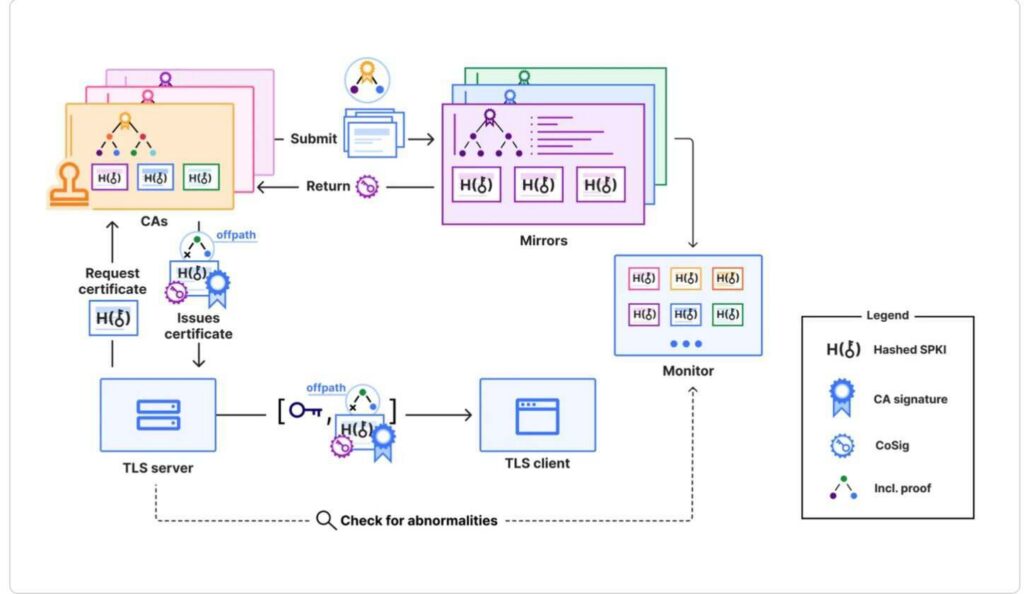
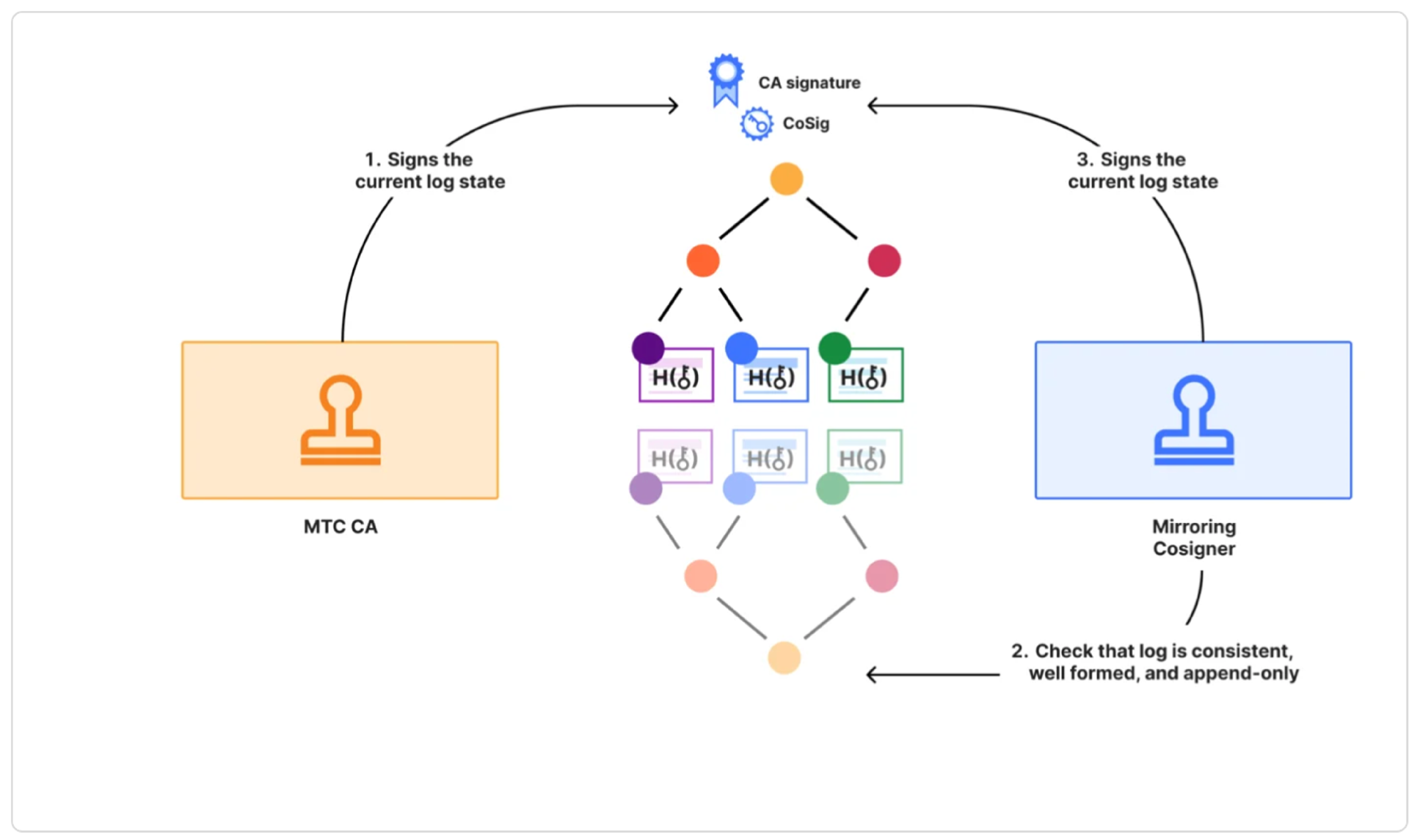
MTCs combine certificate issuance with transparency logging. Rather than signing each certificate individually, a certificate authority adds certificate data to an append-only Merkle tree and signs checkpoints. A client can then verify inclusion using a compact cryptographic proof instead of receiving a full certificate chain. Cloudflare uses the ACME protocol to validate domain ownership, while independent mirror co-signers verify and retain updated tree states to help detect inconsistent log views and preserve issuance records if the original log becomes unavailable.
Cloudflare also tested certificates verified against authenticated tree landmarks distributed to clients. In the usual case, it said, a TLS handshake carries a public key, a signature and an inclusion proof smaller than 1 KB; the server must still prove possession of its private key. Because a client may be newly installed, offline or missing a landmark update, servers must retain a standalone MTC certificate as a fallback.
Cloudflare frames the approach as one response to the larger signatures expected in post-quantum cryptography: the company says post-quantum signatures can be roughly 40 times the size of conventional ones. Broader deployment still requires independent production monitoring, a diverse ecosystem of certificate authorities and co-signers, and browser support. Responding to the announcement, SSL.com technical support specialist Alicja Tendaj raised questions about certificate revocation and incident handling. Cloudflare said production deployment would help determine whether the approach can maintain transparency, interoperability and availability at internet scale.