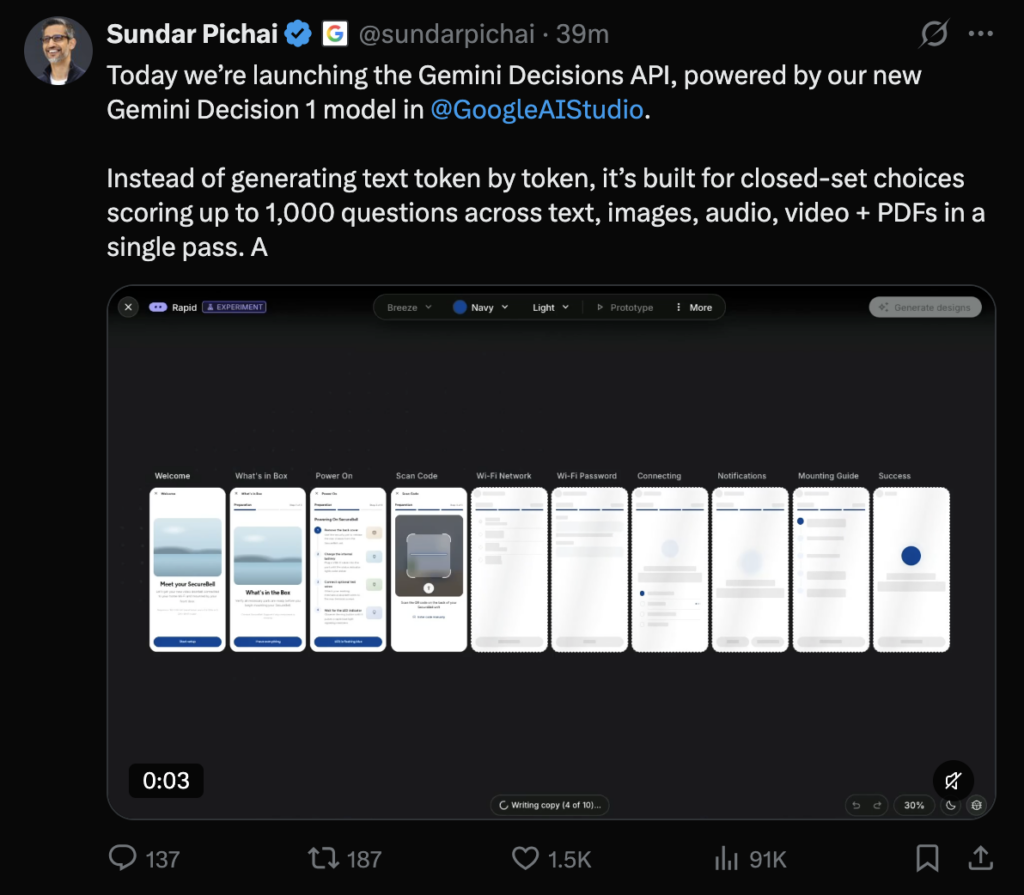
Originally reported November 12, 2026.
Google has released Gemini Decision 1 and the Gemini Decisions API in Google AI Studio for tasks with predefined answers. Rather than generating a response token by token, the model scores candidate choices in a single processing pass. Developers can use it for yes/no judgments, multiple-choice questions with 2 to 255 options, and ratings against an ordered rubric. A request can mix these task types and contain up to 1,000 questions.
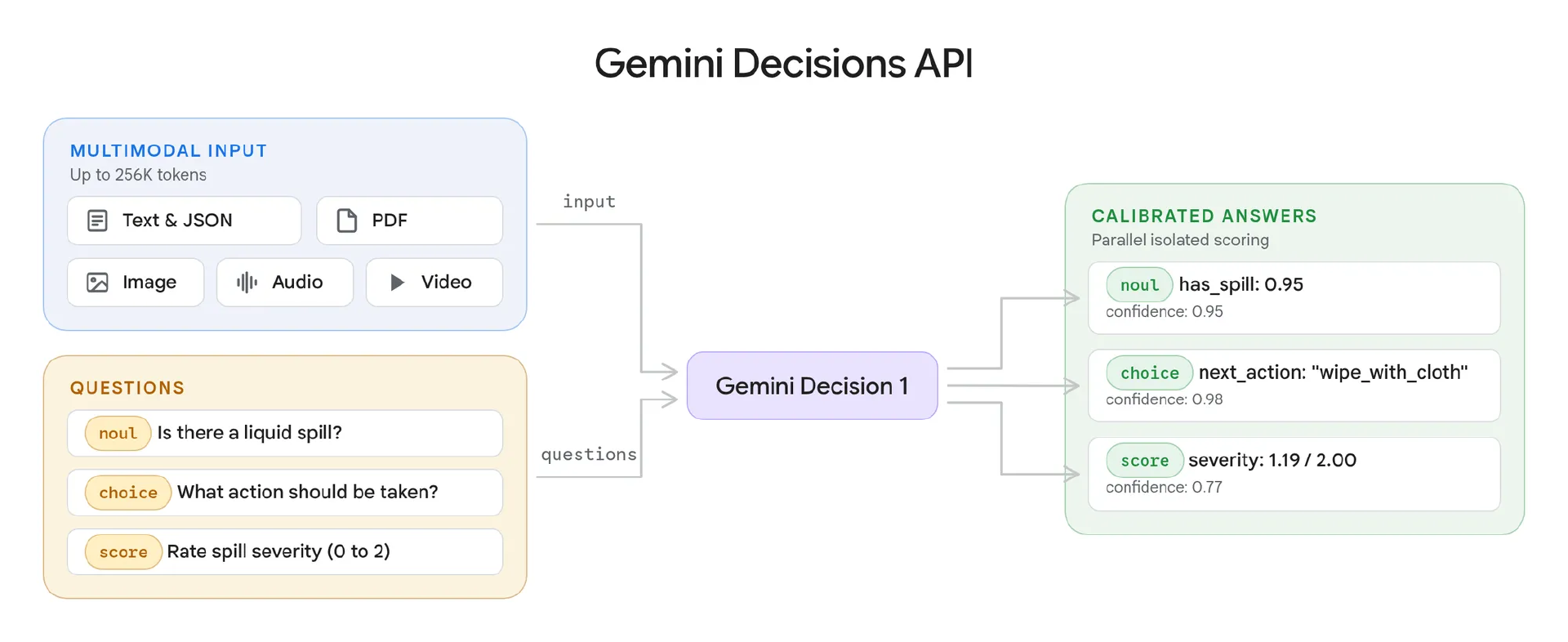
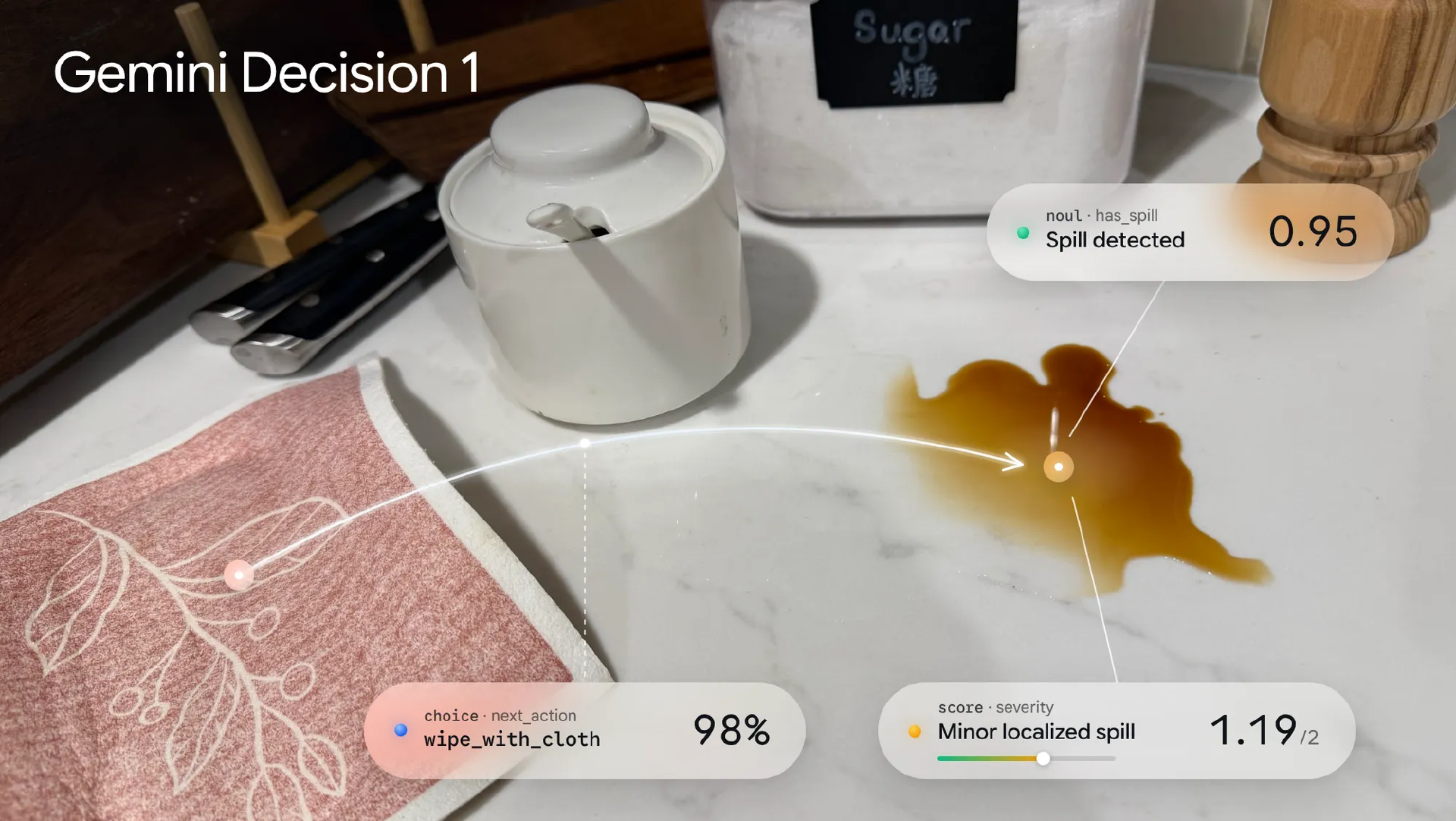
The API accepts text, images, audio, video and PDFs. It returns probabilities for candidate answers and confidence values for individual decisions. Google says the model supports a multimodal input context of up to 256K tokens.
Google lists a price of $0.10 per million input tokens, with no output-token charge. Its reported latency applies to shorter test contexts, not the full supported context: Google measured approximately 150–250 milliseconds end to end in tests using no more than 16K tokens of context. It reported a 50–100 millisecond median for the model-computation stage in those tests.
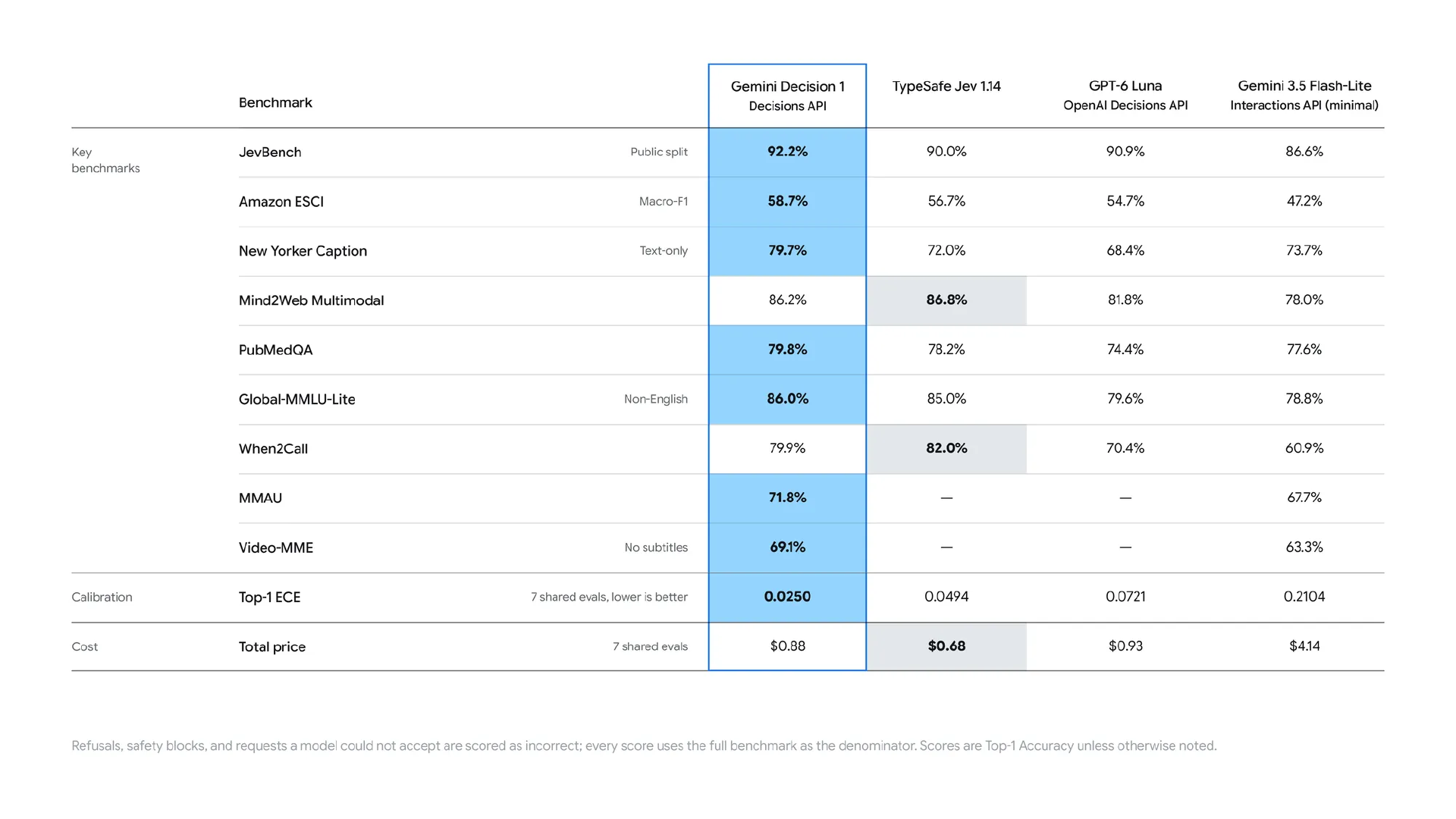
In benchmark results published by Google, Gemini Decision 1 ranked first on seven of nine tests. It scored 92.2% accuracy on JevBench and had a Top-1 expected calibration error of 0.0250. The results were not a clean sweep: TypeSafe Jev 1.14 outscored it on Mind2Web Multimodal and When2Call. Google also says the Decisions API cost nearly five times less than calling Gemini 3.5 Flash-Lite through the Interactions API on its shared benchmark set. These are Google-reported comparisons, not independent measurements.
Google says it is already using the API to route requests between models in Gemini Notebook, where it reports up to 40% lower latency for everyday queries. It also describes uses in Stitch’s Rapid Canvas, emoji selection in Google Labs’ CC product, and an internal Google Search safety layer for MCP tools.
Source: infoq.cn (originally published 2026-11-12 11:00 UTC+8)