Originally reported November 15, 2026.
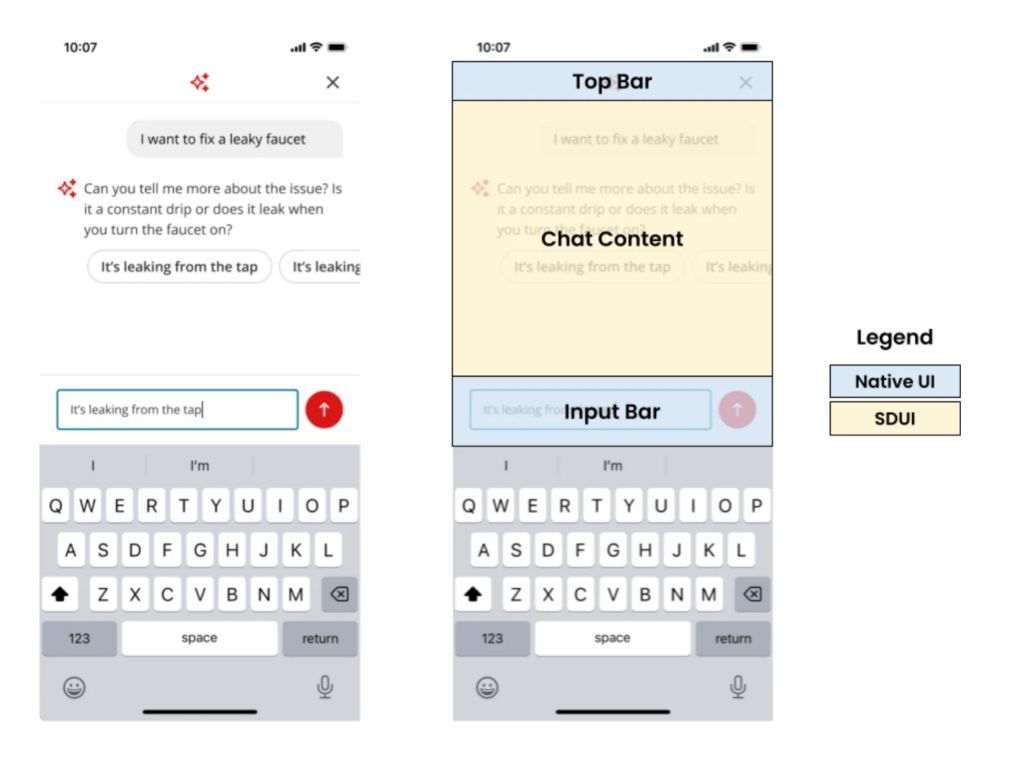
Yelp uses a hybrid interface for its AI assistant: native mobile controls handle navigation and message input, while its server-driven CHAOS framework renders the conversation. The arrangement lets Yelp change the conversation interface without requiring a new mobile app release for every update.
The assistant launched on iOS in 2024 to help users submit requests to local service providers. Yelp later expanded it to answer questions about businesses and support actions such as reservations, appointments and food orders.
CHAOS—short for Content Hosting Architecture with Optimization Strategies—supports web, iOS and Android. Yelp service tech lead Daniel Andrade Groppe said the framework lacked capabilities the assistant needed, including text fields and network requests. Rather than delay delivery to extend CHAOS, the team kept navigation and message input native and used the framework for the conversation area.
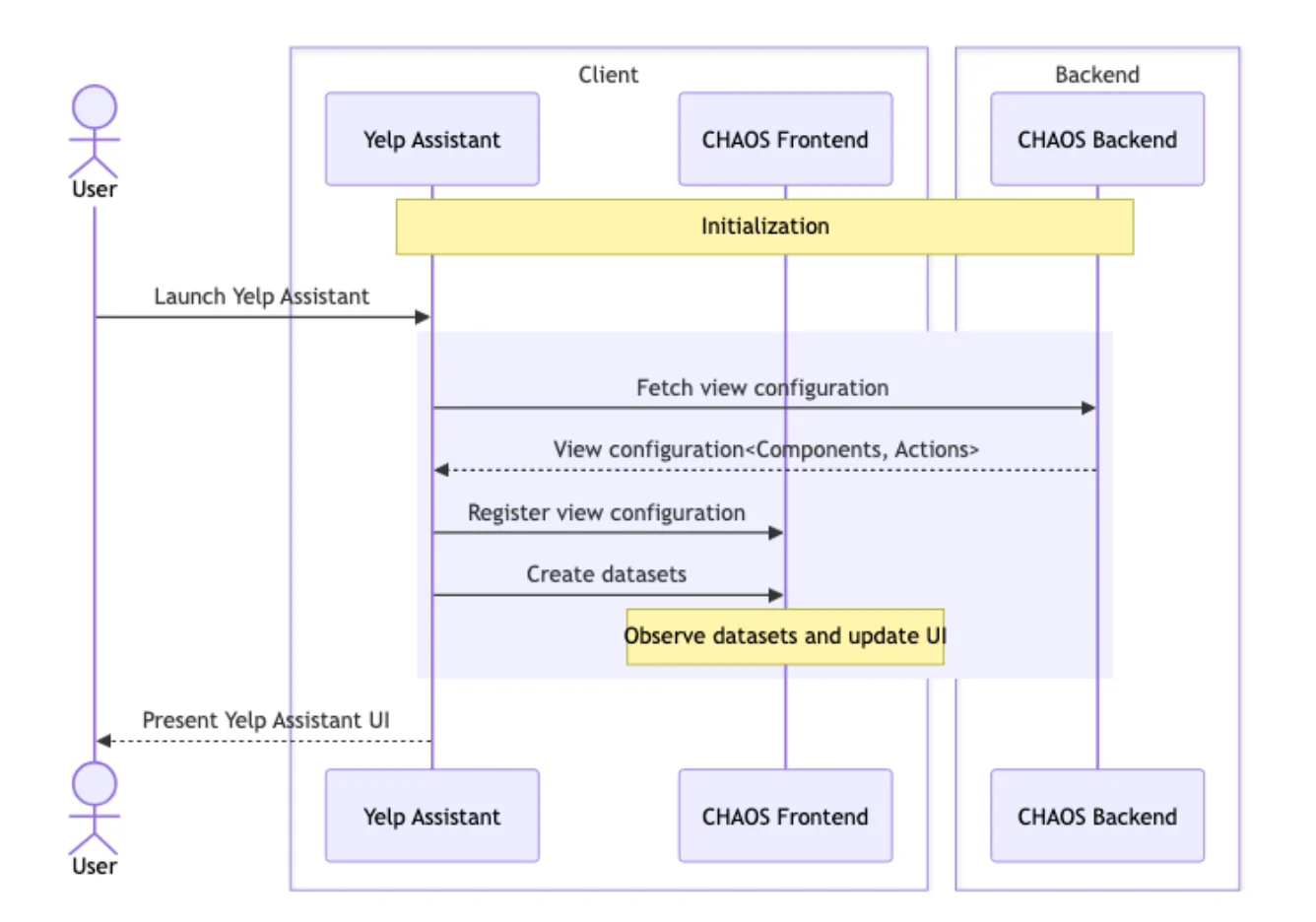
The implementation separates view configuration from conversation data. When a chat starts, the client fetches its CHAOS configuration and initializes a set of message events. Later events update the existing view without fetching the configuration again. Events can represent persistent user and assistant messages, temporary typing indicators and quick replies, or links to other pages. The backend can also send interface actions—for example, disabling chat input after a service request is completed.
Yelp engineers noted trade-offs: developers need to understand both the assistant and CHAOS, and shared logic can still behave differently across platforms. Yelp said the separation of view configuration and conversation data enabled independent feature development and helped it reuse the Android assistant for a Biz Ask Anything pilot.
Source: infoq.cn (originally published 2026-11-15 15:00 UTC+8)