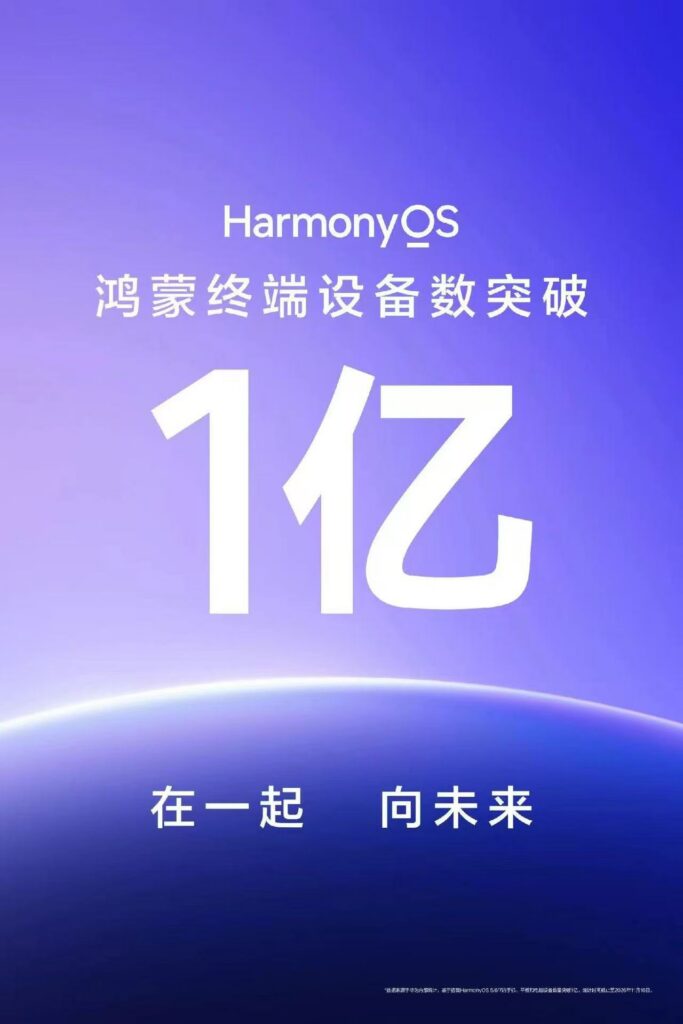
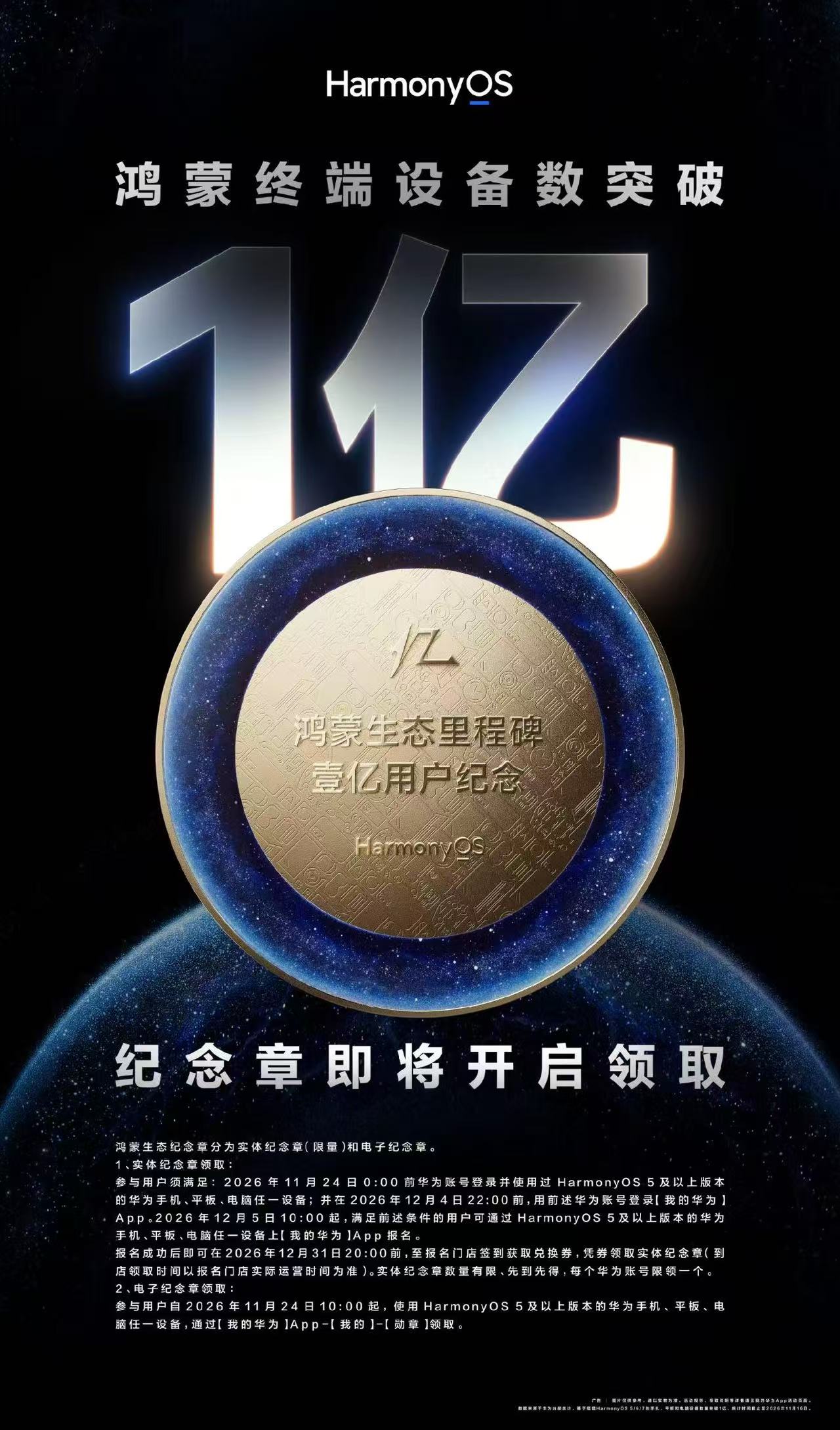
Huawei said on November 24, 2026 that HarmonyOS devices had passed 100 million. The company announced the figure at its Mate X8 and full-scenario product launch, and said the total covers phones, tablets, computers, watches and in-car systems.
Earlier milestones
HarmonyOS NEXT was introduced in October 2024. Huawei has since given a sequence of device totals for the newer HarmonyOS lineup:
- By the end of July 2025, HarmonyOS 5 devices had passed 10 million.
- In November 2025, the Mate 80 series launched with HarmonyOS 6 and the stated total was 27 million. Huawei said it reached 36 million by the end of 2025.
- At its spring 2026 launch, Huawei put the figure at 50 million.
- At its developer conference in June 2026, Huawei said the count had passed 66 million and described HarmonyOS as China’s second-largest smartphone operating system.
- Huawei said the total reached 80 million in late August 2026 and passed 90 million at the end of September with the Mate 90 series.
On those figures, the rise from 10 million to 100 million took about 15 and a half months, and the last 20 million devices were added in about three months.
Apps, PCs and developers
Huawei also cited a wider software base. It said the Huawei AppGallery offered more than 450,000 apps and atomic services, more than 21,000 apps had been adapted for HarmonyOS PCs, and registered developers had passed 11 million. It separately said OpenHarmony ecosystem devices had exceeded 1.3 billion. That OpenHarmony total is not the same count as the 100 million HarmonyOS terminals.
What Huawei claims for HarmonyOS 7
The performance, AI and security details below are Huawei’s product claims, not independent test results.
Huawei says HarmonyOS responsiveness has improved by about 15 percent a year, citing its Ark Engine, a fused performance model and technology it groups under “super space.” It says hundreds of thousands of test racks run continuously in its labs and that apps are checked tens of thousands of times before release.

For HarmonyOS 7, Huawei says on-device AI learns habits and anticipates which apps will be opened. It claims a 22 percent faster launch for mainstream, frequently used apps and 25 percent faster page transitions. It also says an 8 GB device on HarmonyOS 7 can open about 20 apps in a row and still return to the first app on its previous screen.
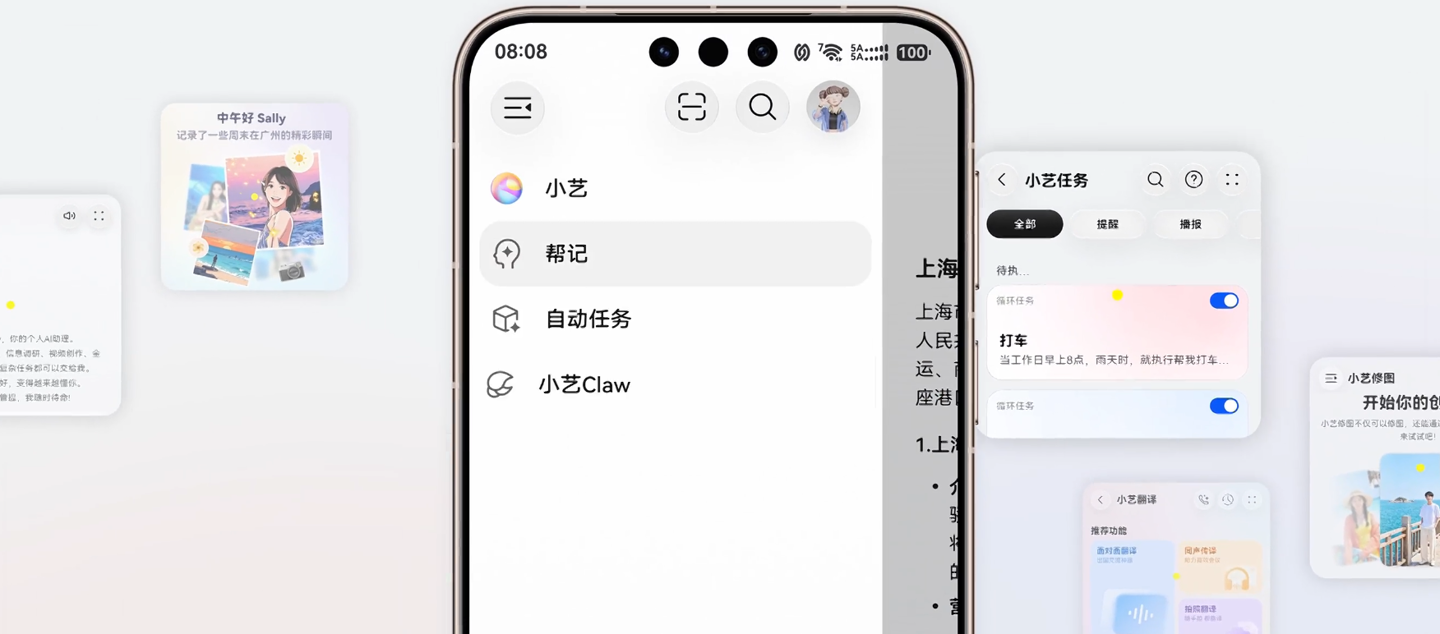
Huawei describes HarmonyOS 7 as moving toward an agent setup. With agent framework 2.0 and combined on-device and cloud planning, it says the success rate on complex tasks is above 90 percent. The system assistant Xiaoyi is said to use more than 200 kinds of system-level data and to be able to call more than 2,100 system capabilities, so the system acts on an intent instead of waiting for the user to open an app.

On the Mate 90 series, already on sale, Huawei says Pro Max and higher models run a 30-billion-parameter omni-modal model locally. Photo retouching, speech transcription and turning a spoken prompt into a short video are described as on-device tasks that can run offline, without uploading photos or call data. Huawei says pulling down on a page can have Xiaoyi file notes across more than 50 frequently used news, social and shopping apps, and that a navigation bar can fill in saved passenger details on booking pages.
On security, Huawei says the StarShield architecture in HarmonyOS 7 can flag AI voice changing, overseas call forwarding and fraud scripts during a call. It says the system has identified millions of fraud risks and blocked tens of millions of malicious app installations. Those are cumulative company figures, with no public breakdown in the announcement.

Mate X8
The Mate X8 foldable, announced the same day, is presented as a large-screen HarmonyOS device. Huawei says Xiaoyi meeting notes use voiceprints and long-range microphones to separate speakers and draft minutes. It also says a virtual trackpad maps the far corners of the unfolded screen into one-handed reach, alongside grip sensing, a multi-window view and a thinner body.
Partner apps
Huawei says more than 23,000 apps have taken part in HarmonyOS ecosystem work, partners have contributed more than 160 capabilities, and those capabilities have been reused by more than a thousand apps.
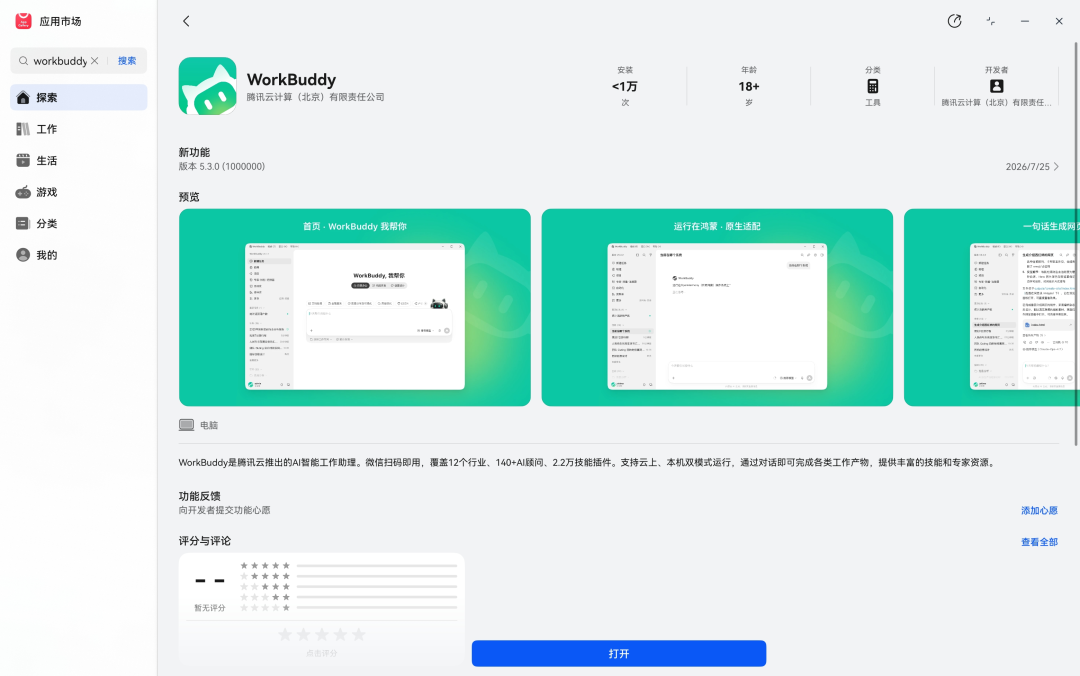
Named examples include a Tencent effort that adapted more than 60 products, with WorkBuddy using a tap gesture to move conversation records between devices. CapCut (Jianying) is said to have shipped 11 HarmonyOS versions in 2026 and passed 20 million downloads, with footage moving from phone to tablet or PC. Alipay is described as linking to the opened StarShield anti-fraud service so the app can warn the user and ask for a second check when the system sees a risk; Huawei says this has reduced fraud losses, but it did not give a figure. For PCs, the launch account cites WPS, DingTalk and ZWSOFT CAD.
Huawei says HarmonyOS 7 offers lightweight on-device 3D Gaussian splatting as a system interface, using the Ark graphics engine and the NPU, so a phone can build a 3D model of a physical object in a few minutes. It points to Dianping restaurant walkthroughs at full scale, JD.com product views, Amap navigation with audio that follows the route, and a customizable 12-track spatial sound field from Kugou. A smaller health app, Xiaoka Health, is cited for a “3D food photo” that estimates volume and calories from a picture.
Developers and campuses
Huawei says the DevEco Code and DevEco CLI tools, and an AI debugger drawing on more than a thousand recorded fault patterns, can shorten some diagnosis work from days to minutes. It also says more than 650 universities in China offer more than 800 HarmonyOS-related courses, nearly 9,000 students have explored agents and multi-device use in campus contests, and the Hongtu and Tiangong programs are aimed at open-source and AI development.
Huawei vice chairman and rotating chairman Xu Zhijun has previously compared a user base on the order of 100 million to an aircraft’s lift-off speed. That remark was about users. The November 24 figure is a count of devices.