Alibaba announced Qwen4-Max on November 16, 2026, according to a report published the following day. The company says its new foundation model has 2.4 trillion total parameters, native visual capabilities and support for a one-million-token context window.
Qwen4-Max uses a mixture-of-experts architecture based on Qwen Sparse Attention. Alibaba says 71 billion parameters are activated per token, 25% fewer than in its previous model. In a Terminal-Bench 4.0 comparison at the same “Xhigh” reasoning setting, it reported that average token use per attempt fell from 289,000 for Qwen3.8-Max to 151,000 for Qwen4-Max, while the score rose from 38.9 to 48.5. The report also says average cost per task in that evaluation fell by 58%, factoring in a lower cache-hit price. These are reported results, not independently verified tests in the source material.
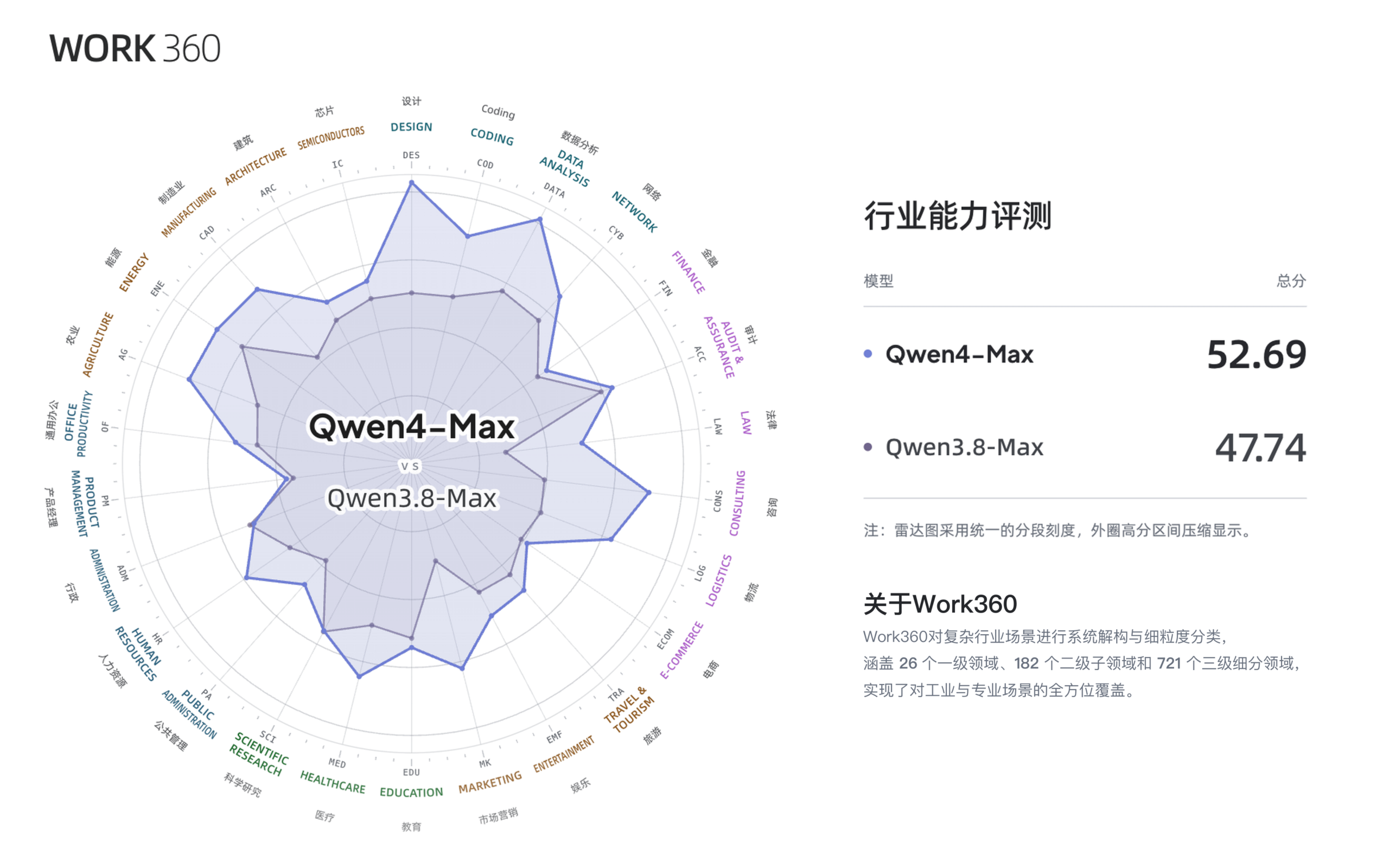
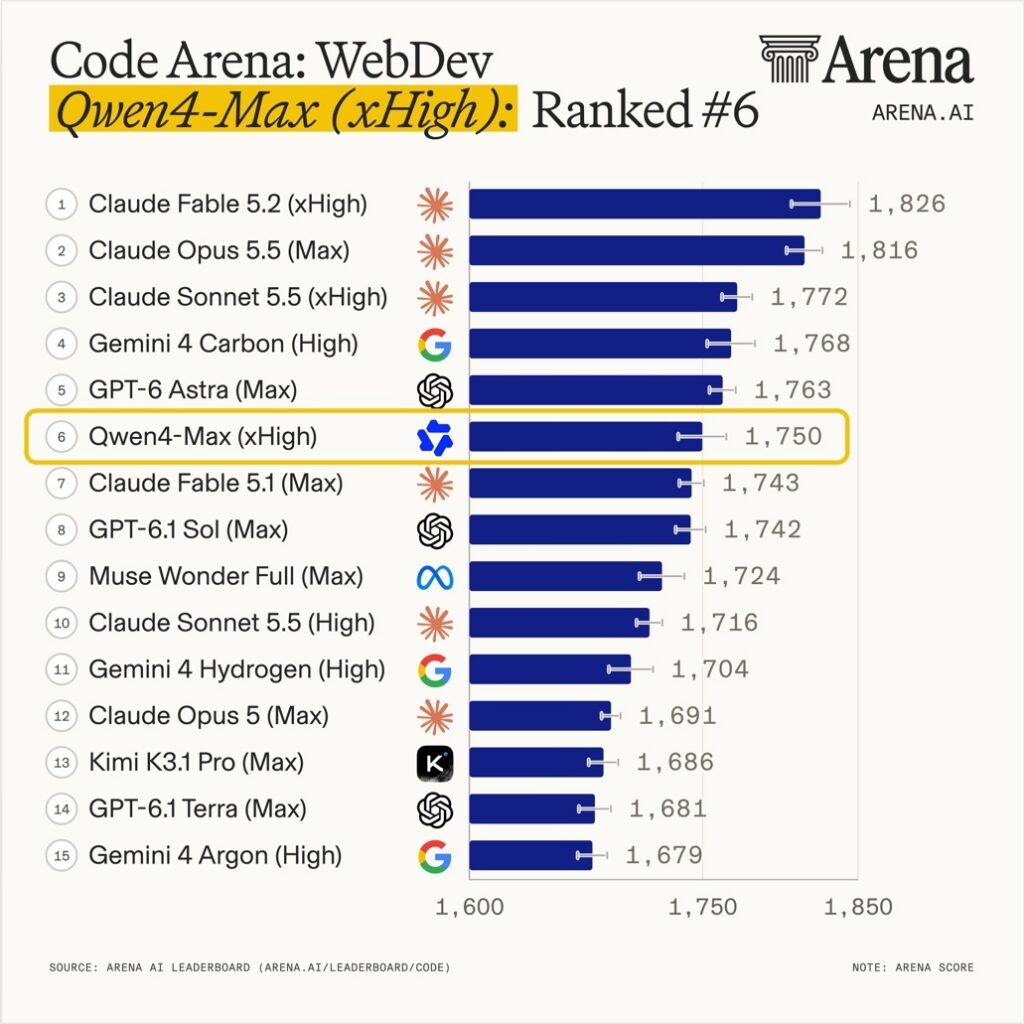
Alibaba reported a sixth-place ranking for Qwen4-Max in CodeArena’s front-end development blind test. It also cited a score of 46.7 on Agents’ Last Exam, up 18.8 points from Qwen3.8-Max. The company described applications ranging from software development to manufacturing and scientific research, including a reported materials-discovery experiment that synthesized a new cooling-liquid material after four design, synthesis and testing cycles. The source does not establish how broadly those results would generalize.
Qwen4-Max is available through the Qwen AI platform’s API, with cache hits priced as low as 0.5 yuan per million tokens. Alibaba says users can also access it through Token Plan, Qwen workplace tools, Qoder and the Qwen app. Smaller models in the Qwen4 series are expected to be released as open source later; no release date was given.