As reported on November 19, 2026, Tiger Data had released pg_vectorsearch, an open-source PostgreSQL extension for vector similarity search. It was in alpha and required PostgreSQL 18 or later.
The extension works with existing pgvector columns. To use its new indexing method, developers must install pg_vectorsearch and create a PRISM index on a vector column:
CREATE EXTENSION pg_vectorsearch;
CREATE INDEX ON documents USING prism (embedding vec32_l2_ops);
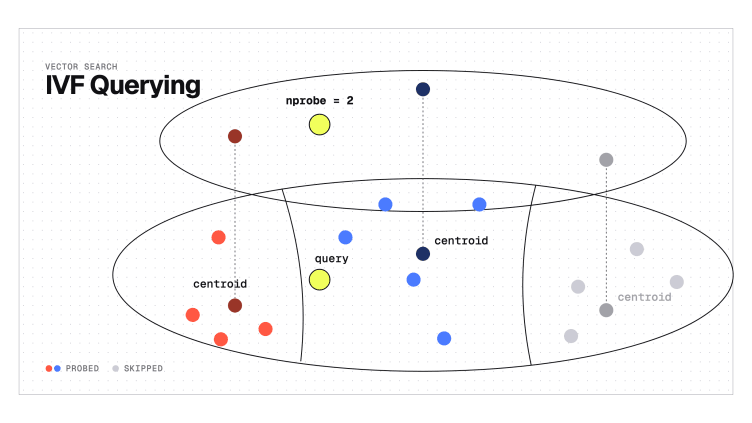
PRISM takes a different approach from pgvector’s graph-based HNSW index. According to Tiger Data, it groups similar vectors into partitions and stores them as compressed lists, allowing searches to scan relevant partitions rather than traverse a graph. Tiger Data co-founder and CTO Michael Freedman said the design also uses hierarchical clustering, RaBitQ quantization and duplicated vectors near partition boundaries to improve search efficiency and recall. It relies on PostgreSQL’s native storage, logging and concurrency mechanisms.
The performance figures are Tiger Data’s own, not independently verified. In its benchmark using 100 million vectors, Tiger Data said PRISM built an index in 1 hour and 40 minutes on a machine with 128 GB of RAM, while HNSW took 42 hours on a machine with 512 GB. The company said it used open-source benchmarking tools, compared top-10 recall against exact search results, and used the same PostgreSQL configuration and instance types for its index comparisons. Its HNSW test used pgvector’s 16-bit halfvec type.
There are limitations. Freedman said incremental rebalancing is not fully implemented: as data changes, clusters do not automatically move with it, and rebuilding an index may be necessary to maintain search efficiency. The extension supports vectors of up to 1,968 dimensions. Filtered vector searches combining WHERE and ORDER BY were not supported ahead of its general release.
Discussion on Hacker News reflected interest in lower-memory vector search within PostgreSQL, alongside questions about independent benchmarks, filtering support and whether pg_vectorsearch could replace Tiger Data’s existing pgvectorscale extension. Tiger Data said it planned to move pgvectorscale into maintenance mode. The pg_vectorsearch code was available on GitHub.