范式智能 released two Phai models on November 18, 2026: Phai-A1 for language and coding tasks, and Phai-M1 for video generation. The claims drew attention when reported on November 19, but the available details do not establish how either model performs in independent tests.
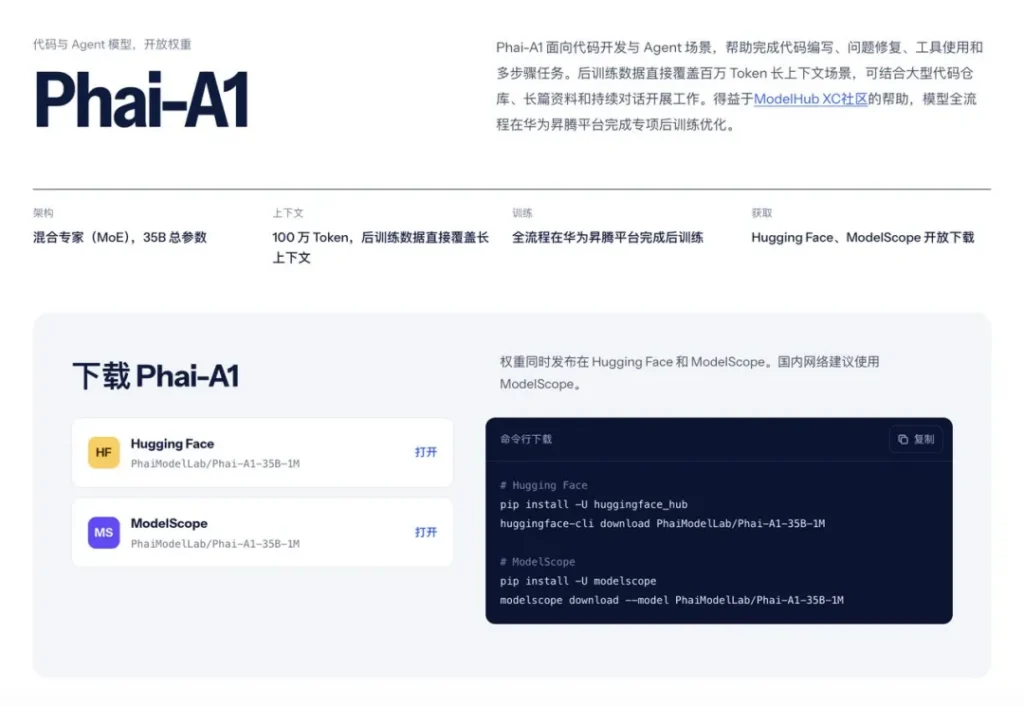
For Phai-A1, the company reported responses roughly 8–10 times faster than Qwen 27B in its tests using a single RTX 3090 and the same version of a code-agent task. That is a comparison under specified conditions, not a general speed benchmark. Public ModelScope information cited in the report describes Phai-A1 as a mixture-of-experts model with 35 billion total parameters and about 3 billion activated per token.
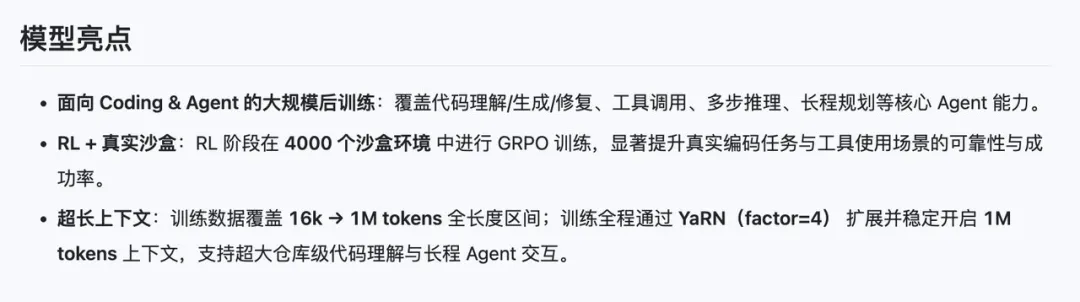
The report says Phai-A1 supports a one-million-token context, with model weights additionally adapted using YaRN at a factor of four and RoPE scaling enabled in its configuration. According to the company, it can run locally on a consumer GPU with 16 GB of video memory; it also offers two quantized versions for 24 GB configurations. Details of the techniques behind its performance had not yet been published in a technical report.

Phai-M1 targets video production. The company emphasizes realistic-looking people, visual detail and synchronized audio and video. The report cites a generation time of three minutes for a 15-second video, but provides no independent comparison or detailed evaluation of visual quality.
The development path is also notable: according to the report, Phai-A1 was developed from an open-source model, with post-training and reinforcement-learning work carried out on Huawei’s Ascend platform. That does not mean its base model was trained from scratch on Ascend.