A November 24, 2026 report by The Seoul Economic Daily said Samsung Electronics plans to make its Xi’an semiconductor plant in China a key production base for enterprise SSDs used in AI data centers. The reported plan focuses on increasing output of ninth-generation vertical NAND, known as V9.
Citing sources, the report said Samsung intends to upgrade equipment in the X2 plant’s cleanroom, add a V9 production line with capacity for about 20,000 300 mm wafers per month, and convert roughly 20%–30% of an existing V6 line to V9. After the changes, V9 capacity is expected to reach 50,000–60,000 wafers per month. Equipment is expected to arrive around February 2027, with the work planned for completion in November 2027. These are reported plans, not completed changes.
As of the second quarter of 2026, Samsung’s X1 and X2 plants in Xi’an could each process 50,000 wafers per month, for a combined 100,000. That represented about one-third of the company’s roughly 300,000-wafer monthly NAND capacity across Xi’an and Pyeongtaek.
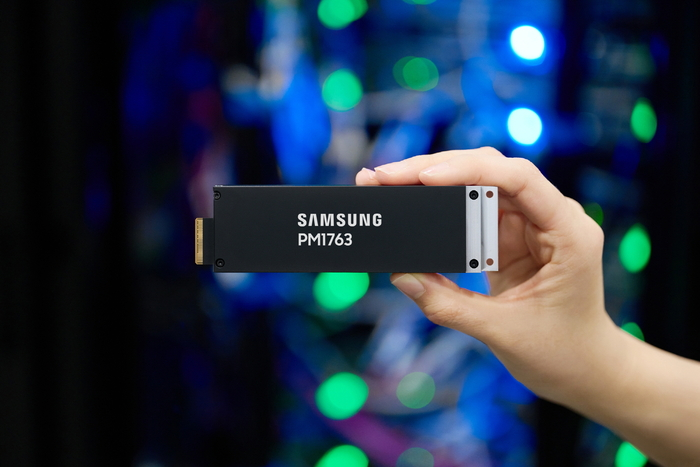
Samsung’s published specifications describe V9 NAND as having 286 stacked layers. For its triple-level cell product, the company says V9 offers about 50% more storage capacity at the same chip area than the previous generation, with a maximum chip data I/O speed of 3.2 Gbps, about 33% higher. Samsung announced in July 2026 that its V9-based PM1763 enterprise SSD had entered mass production.
The reported expansion should be read alongside Samsung’s earlier statement to Reuters. In an October 21, 2026 report, Reuters said Samsung was converting the Xi’an plant to a 286-layer NAND process to meet global customer demand; Samsung said that work did not involve expanding capacity or building new facilities. The November report describes additional proposed production-line changes, but does not resolve the difference between those accounts.
Research firm TrendForce forecasts that demand for NAND used in enterprise SSDs, measured by storage capacity, will grow 84% in 2026 and 55% in 2027. It expects enterprise SSDs’ share of total NAND demand to rise from 45% to 57% over those two years.