At Android Dev Summit 2026, Google’s Android developer team announced updates to its coding tools, APIs for AI agents and support for apps across different device types. The announcements, reported on November 11, 2026, include features at different stages of release—not all are ready for production use.
More choices for coding agents
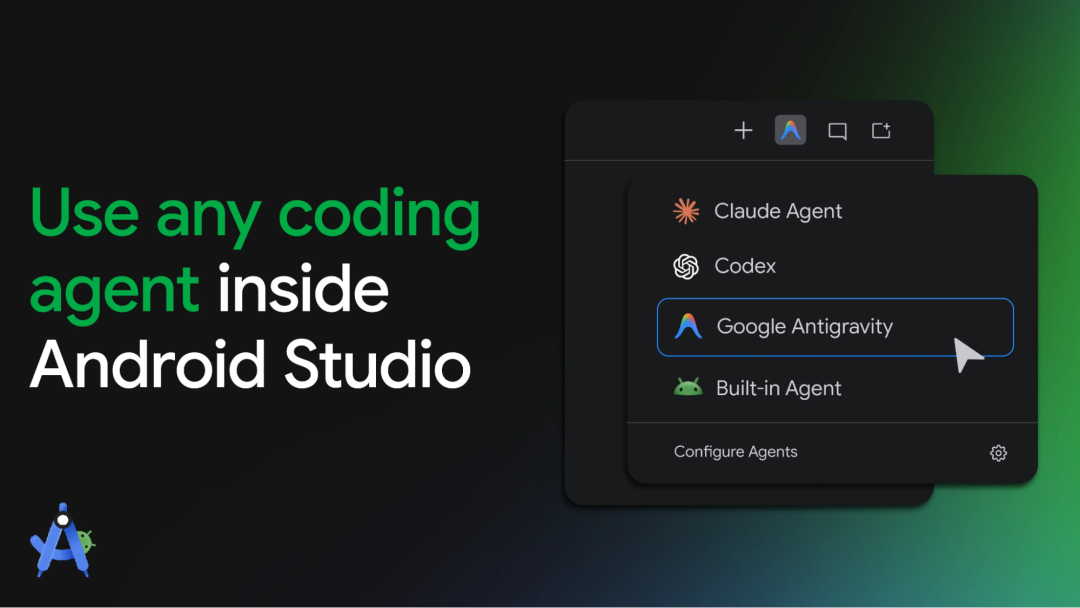
Android Studio Rabbit 2 is now stable. Google says developers can use Claude Agent, Codex, Antigravity or more than 40 other agents compatible with the Agent Client Protocol (ACP) inside the IDE.
Android CLI has gained Firebase-backed streaming for testing on remote physical devices and a way for agents to render Jetpack Compose previews without launching an emulator or deploying an APK. Its other updates include Perfetto system traces for performance debugging and checks of app bundles and AAR/JAR libraries before upload. Google also introduced more than 30 Android Skills spanning over 20 areas, including permission security and Compose performance, and updated its Antigravity plugin while releasing plugins for Claude Code and OpenAI Codex.
APIs for agent-powered apps
Google outlined several ways for apps to expose functions to AI agents. Developers can prototype integrations with Gemini as a system-level agent through Connected App, then register for the Connected Apps Platform preview when ready to publish. The platform is intended to help app services appear in Gemini and Google Search. AppFunctions, which lets agents call app functions through Android’s unified tool-calling layer, is now in beta.
For interfaces generated in response to an agent, Agent-to-UI (A2UI) for Jetpack Compose is in alpha. Google also announced an alpha ML Kit Agentic API for on-device agents built on Gemini Nano 4. According to the Android team, it can execute functions, retain conversation history, manage orchestration loops and apply built-in safety measures.
Adapting apps to more screens
AppState is in alpha and is designed to help Compose apps retain state through device-configuration changes. Navigation 3 version 1.2 is stable, with deep-link support and expanded predictive-back handling. Compose 1.13 was described as approaching stable release, rather than already stable; Google said it would add adaptive-layout capabilities alongside features such as Progressive Blur and Formatted Text.
Google says its updated Compose adaptive Skill can help developers adapt existing apps for desktop controls and layouts, including keyboard shortcuts, pointer cursors and hover states. It also supports foldable-device posture changes. The team said Google Play would place greater emphasis on how apps and games work on foldables in 2027, with specific store requirements to be announced later in 2026. Those requirements had not yet been set out in the announcement.
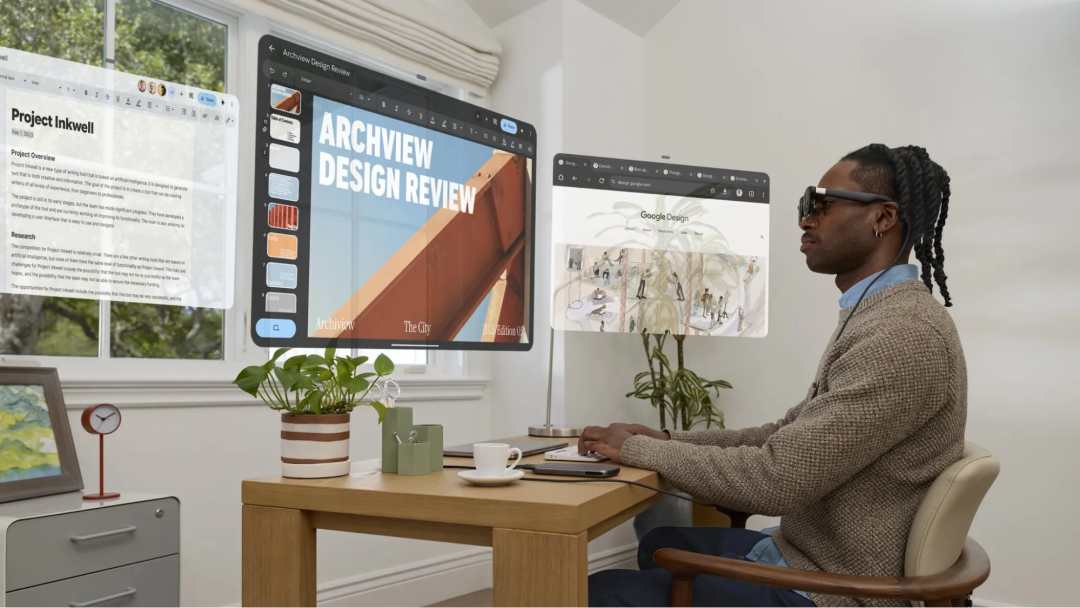
For Android XR, Google and XREAL introduced the wired XREAL AURA glasses. Google said the core Jetpack XR SDK libraries, the Android XR emulator in Android Studio and Android XR Engine Hub are now stable. It also described Geospatial APIs for anchoring digital content in the real world on supported XR and smart glasses.