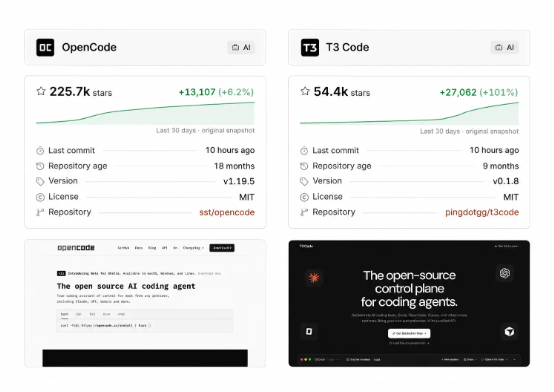
As reported on November 16, 2026, T3 Code’s Orchestrator V2 had reached a stable release after roughly six months of work on coordinating multiple models and coding-agent tools. The open-source project offers a graphical interface for working with tools such as Codex and Claude Code, rather than requiring developers to manage each one separately.
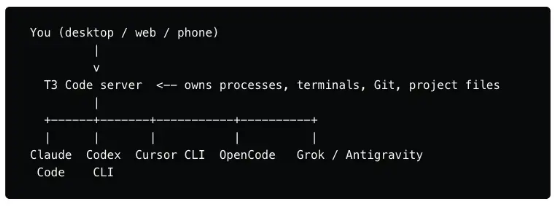
In an interview with host Joel Hooks, T3 Code creator Theo Browne said the project grew out of a frustration with coding desktop apps that users could not modify when their interfaces changed. T3 Code instead runs a WebSocket server connected to coding-agent tools on a computer. Its desktop, web and mobile interfaces can connect to that server, including from another machine. Browne described using the setup to keep work running on a remote computer while accessing its threads from a laptop.
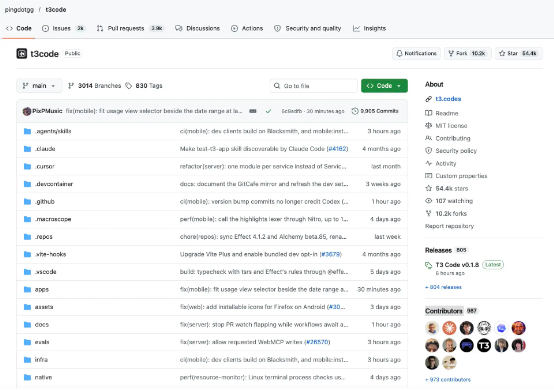
The article reported more than 700,000 users and, at the time of reporting, 987 contributors, 54,400 GitHub stars and 10,200 forks. T3 Code is released under the MIT license. It does not sell AI model access; users must provide their own subscriptions.
Browne argued that giving coding agents more autonomy makes established engineering safeguards more useful, not less. Type checking, tests, CI and preview environments can help an agent verify a change despite knowing only part of a codebase. He also described using AI-assisted code review for conventions that are difficult to express as lint rules, while acknowledging that such checks are not perfect.
His advice was to automate parts of work a team already understands—not to use AI as a substitute for learning how that work succeeds or fails. That is a perspective from the interview, rather than a measured claim about coding-agent performance.