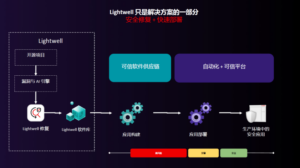
In reporting published on November 19, 2026, Anthropic described how the Claude Code team reviews code when, by its account, Claude writes about 90% of Claude Code itself. The team’s aim is for most pull requests to be merged with no more than one person involved—including, potentially, the person who submitted the change—without increasing reversions or incidents.
The review process followed a sharp rise in activity in Anthropic’s monorepo: merges grew from roughly 2,500 changes a day in May to more than 30,000 a day in September. Anthropic’s team also said no one on it holds a complete mental model of Claude Code. When engineers need to understand part of the codebase, they ask Claude to produce an explanation that reflects its current state.
That approach prompted a debate about debugging. Hacker News commenter jonahx argued that, if a critical failure arose that nobody could trace, the team would be relying on Claude to understand and repair a system no person fully understood. Other commenters noted that no single engineer fully understands many large systems either.
Anthropic described a more immediate problem with agent-to-agent review: an automated submitter may fix minor findings that a person would simply dismiss, triggering another submission and review. The team said one CLI pull request went through more than 50 review-and-fix rounds overnight before its submitter stopped it. It has since capped review rounds. The team also reported that, when it used git blame to examine code repeatedly flagged by a reviewer, about 59% of that code had not changed since the first review. In its assessment, later rounds were often finding more old bugs rather than new ones.
A classifier assigns risk levels based on the change, not its submitter. Low-risk changes, including documentation and copy, can proceed without human approval. Medium-risk changes, such as those affecting caching, auto-updaters or system prompts, require one person’s approval. An agent’s approval never counts as human approval, while the person who initiated a change can count toward the required number.
Questions remain about those boundaries. A Reddit commenter asked whether agent instructions published as documentation could be treated as low risk despite changing agent behavior; the discussion provided no answer. The team also acknowledged that it does not yet have a “circuit breaker” to tighten approval requirements when its metrics change, and said engineers want one before more code moves to zero-human merges.
A separate dispute illustrates the limits of relying on generated explanations. In August 2026, Claude Code collaborator Boris Cherny posted a reply marked as generated by Claude Code about automated issue closures. The reply said issues were not classified solely by vote counts and suggested reopening them by commenting. But the repository’s issue-lifecycle.ts specified that issues became stale after 14 inactive days and closed after another 14, with an exception for issues receiving at least 10 upvotes. Developer marcindulak reported that more than 6,000 issues containing reproduction steps had nevertheless been closed for inactivity. The workflow also locked issues seven days after closure, preventing the suggested remedy in those cases.
Code Review for Claude Code is available on Team and Enterprise plans. Anthropic’s separate open-source security-review GitHub Action carries a warning in its README: it has not been hardened against prompt injection and should be used only to review trusted pull requests.